The Drake Group Urges Congress to Amend the Protect College Sports Act of 2026 to Better Serve College Athletes and Higher Education

Home / Featured

The Drake Group Urges Congress to Amend the Protect College Sports Act of 2026 to Better Serve College Athletes and Higher Education

Organization Commends Bipartisan Congressional Effort While Recommending Key Amendments to Protect Educational Integrity, Athlete Welfare, and Institutional Accountability

WESTPORT, CT  — July 13, 2026 — The Drake Group today called on Congress to amend and strengthen the proposed S.4668, Protect College Sports Act of 2026 as lawmakers consider landmark legislation designed to establish a national framework for governing intercollegiate athletics.

The Drake Group applauds congressional leaders for recognizing the urgent need for federal legislation following years of legal uncertainty surrounding college athlete compensation, conference realignment, transfer policies, and governance of college athletics. At the same time, The Drake Group urges Congress to ensure that any final legislation preserves the fundamental educational mission of America’s colleges and universities while providing meaningful protections for college athletes.

“With certain amendments we are proposing, the Protect College Sports Act represents an important opportunity to restore stability to a rapidly changing intercollegiate athletics landscape,” said Kassandra Ramsey, President of The Drake Group. “We commend Congress for undertaking this difficult work. College athletes deserve meaningful economic opportunities, but they also deserve robust educational protections, transparent governance, gender equitable opportunities, and institutions that remain accountable for their academic success and overall well-being.”

Among its recommendations, The Drake Group encourages Congress to amend S. 4668 before adoption to:

  1. Provide that unless specifically stated in the Act to the contrary, nothing in the Act shall amend, modify, supersede or conflict with existing federal law.
  2.  Provide for waivers of the new 5-year eligibility rule for athletic injuries or medical conditions.

The Drake Group recommends further amendments to the Act to require the newly established Commission to consider the following issues: 

3   Whether NIL and revenue share compensation data to college athletes should be made transparent and disaggregated by sport.

  1.  Whether the provision mandating 2024-25 level provision of financial assistance should go beyond grants-in-aid to include other forms of financial assistance, such as summer school aid, special assistance funds, academic awards, summer training expenses, and other cash benefits that were received by women and Olympic athletes in 2024-25.  
  2.  Whether athletes should have the right to choose arbitration for the resolution of issues and disputes without restrictions.
  3.  Whether there should be an asymmetrical approach to the assessment of reasonable fees and costs in a dispute such that an award against a student only occurs if the student’s claim was frivolous, unreasonable or without foundation.
  4.  Whether the sports broadcasting revenue distribution provisions of the Act should provide incentives to do more than maintain the minimum 2024-25 support for women’s and non-revenue Olympic sports, and whether there should be a category that rewards schools for sponsoring sports beyond the minimum required for Division 1 membership.

 “As Congress works toward final legislation, we encourage policymakers to develop solutions that protect students first, strengthen public confidence, and preserve the educational values that distinguish intercollegiate athletics,” Ramsey said. “The choices made today will shape college sports for generations.  Therefore, now is not the time to rush, now is the time to take the opportunity to get this right, even if that means taking action following the upcoming Congressional recess,” Ramsey concluded.

The Drake Group looks forward to continuing its work with members of Congress, higher education leaders, college athletes, athletic administrators, and other stakeholders as the legislative process continues.

SEE FULL JULY 11, 2026 DRAKE ANALYSIS AND RECOMMENDATIONS HERE
SEE PAGE-NUMBERED COPY OF JUNE 18 AMENDED BILL 

The Drake Group Releases National State-by-State Database of Athletics Name, Image, and Likeness Legislation

The purpose of updating the 2021 database created by The Drake Group is to provide legislative policymakers, athletics administrators, and college athletes with current knowledge of state laws related to NIL and other third-party employment. School administrators need to understand what laws require in their own states and the states where their teams compete, to best guide their student-athletes, especially when … Read more

Press Release: The Drake Group Urges Members of Congress to Oppose the SCORE Act and Support the College Athletics Reform Act as an Alternative

WESTPORT, CT — December 1, 2025. Kassandra Ramsey, President of The Drake Group (TDG), a 501(c)(4) non-profit academic think tank working to further the education of the U.S. Congress and higher education policymakers about critical issues in intercollegiate athletics, issued the following statements concerning two bills being considered by Congress.

Statement Opposing H.R. 4312 the “Student Compensation and Opportunity

through Rights and Endorsements Act” (“SCORE Act”) and asking Congress to consider the “College Athletics Reform Act” (“CARA”) as an Alternative


The SCORE Act is Flawed

The SCORE Act, as currently written, provides institutions, conferences, and the NCAA with an antitrust exemption, preemption of state laws, and classification of college athletes as non-employees, effectively codifying the House v. NCAA (and Power Five Conferences) settlement. Congress should consider this purpose highly questionable, given that approval of the settlement is now on appeal, and the lawsuit has never been litigated on its merits.

We are particularly concerned about the impact of this legislation on athletes from lower socio-economic groups, a population in which athletes of color are overrepresented and more likely to be educationally exploited by their institutions, economically exploited by uncertified agents, and who are now being subject to onerous contract terms by their institutions as a condition of engaging in revenue sharing now permitted in the settlement and by the Act.

In addition to significant protection against antitrust and state law litigation, the bill gives the NCAA almost total control of college athletics in perpetuity in return for college athletes giving up employee rights, receiving limited economic benefits, and getting insufficient health, athletic injury, transfer rights, and other protections. The granting of 20% of the voting power to college athletes on NCAA boards and committees is a false flag, when 40% is necessary for any minority group to have sufficient power to effect system change.

The institution’s payments from the SCORE Act “revenue pool” are being cloaked as “NIL payments” for promotion or publicity rights claimed in athlete agreements. On the contrary, they are recruiting or retention bonuses or payments based on the estimated value of the athlete to win games in sports that generate revenues. Thus, in reality, they are “pay for play.” These payments are both untethered to education expenses or purpose and unlimited in the amounts offered to individual athletes.

The bill establishes a cash-transaction recruiting and pay-for-play athletics culture that benefits primarily the 18,000 male football and basketball players, who represent a fraction of the 185,000 Division I athletes, and the highly paid Power Four coaches and administrators. The bill’s focus on cash benefits derived from revenues for performance will result in academic institutions treating these athletes as expendable ‘employees’ as opposed to students seeking academic degrees. The payments most likely will not be renewed if more talented athletes are available in the transfer pool.

Further, the bill undermines federal and state laws that require equitable treatment of female athletes by failing to incorporate guardrails for Title IX compliance.  Few institutions—especially low-resourced Division I schools—will have sufficient funds to support pay-for-play revenue sports, gender equity, and Olympic or other low-revenue-producing teams.

Lastly, the Act does nothing to control the cost of exorbitant coaches’ salaries, benefits, or exit pay-outs, which have already exceeded $200 million in the first three months of this academic year. Running average annual operating deficits of $15 to $20 million, only 20 to 25 of the 350 Division I schools break even on an operating basis, with all now seeking increased institutional subsidies, donor dollars, and private equity infusions to finance these deficits and raise the additional escalating $20.5 million PER YEAR permitted by the SCORE Act.  This bill does not stop the financial bleeding.

This cannot be how Congress wishes a non-profit educational entity to operate.  Congress can and must do better.  Thus, we urge members of Congress to oppose the adoption of H.R. 4312, the SCORE Act.

The College Athletics Reform Act (CARA) is a Better Alternative

A broad coalition of independent organizations representing athletes, legal experts, and advocates for fair competition has been working with Representative Lori Trahan (MA-03) on a preferred alternative to the SCORE Act. The bill addresses the most pressing athlete protection issues in college sports — the regulation of sports agents, the assurance of athletes’ NIL rights, and an enforcement system (FTC and state attorneys general) more likely to protect all athletes rather than the commercial interests of a few.

Importantly, it also provides a blueprint for moving forward with a bipartisan Congressional Commission that will have the time and data needed to develop solutions to those issues that have created the current legislative stalemate.

Supporters include professional athletes’ players associations, the National College Players Association, the College Basketball Players Association, the VOICEINSPORT Foundation, The Drake Group, the American Association for Justice, The Center for Law and Social Policy, and the Committee to Support the Antitrust Laws.

We understand that Representative Trahan will introduce the bill today as a substitute for the SCORE Act.

The Drake Group strongly endorses CARA and urges both sides of the aisle to come together to address what all can agree to now in the spirit of nonpartisan support. Then, we need to continue moving forward together over the next two years, assisted by experts who understand the complex issues involved in fixing our intercollegiate athletics system, so that college sports will better serve our athletes and higher education institutions.

READ THE DRAKE GROUP NOTES AND COMMENTS ON SCORE ACT PROVISIONS 

The Drake Group Issues Congressional Briefing Paper: “Computation of Title IX Compliance Under the Terms of the House v. NCAA Settlement.”

On July 28, 2025, The Drake Group issued a Congressional Briefing Paper, “Computation of Title IX Compliance Under the Terms of the House v. NCAA Settlement.” in response to multiple requests from U.S. House and Senate staff members who have queried The Drake Group concerning this topic. Kassandra Ramsey, President of the Drake Group, issued the following statement: … Read more

The Drake Group Report: An Analysis of Objections to the Proposed Settlement of College Athlete NIL Litigation (aka House/Carter v. NCAA and Power Five conferences)

On March 24, 2025, The Drake Group released this major report analyzing the objections to the proposed settlement of major antitrust cases that would profoundly change intercollegiate athletics.  The purpose of the report was to give members of Congress, higher education and college athletics stakeholders, and the general public, greater insight into the nature of Settlement … Read more

The Drake Group Applauds the 2025 “Fair Play for Women Act”

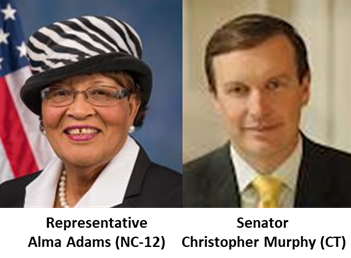
On February 5, 2025, National Girls and Women in Sports Day, U.S. Senator Christopher Murphy (CT-D) and U.S. Representative Alma Adams (NC-12-D) introduced the Fair Play for Women Act in the 119th Congress. Kassandra Ramsey, President of The Drake Group, issued the following statement: “The Drake Group applauds the Senator Murphy/Representative Adams team for stepping up to … Read more

The Drake Group Endorses 2024 GAO Report Detailing Title IX Enforcement Failures

In April 2024, the United States Government Accountability Office (GAO) released a report, “College Athletics: Education Should Improve Its Title IX Enforcement Efforts.” The GAO found that 93 percent of all intercollegiate athletic programs were not offering athletics opportunities to females proportional to their percentage in the full-time undergraduate student body. The overall athletic participation rate … Read more

The Drake Group Releases Congressional Briefing Paper and Calls for the Establishment of a Presidential Commission to Examine the Conduct of College Athletics

On July 11, 2024, David C. Hughes, Ph.D., President of The Drake Group, announced the release of the organization’s preliminary assessment of the proposed settlement of three major antitrust lawsuits against the NCAA and its five most powerful Division I conferences (Power Five conferences). Under the framework and details that have been announced by the … Read more